
%20by%20%E2%80%9EZoish%E2%80%9D%2C%20licensed%20under%20%E2%80%9ECC0%201.0%E2%80%9D%20(https%3A%2F%2Fcreativecommons.org%2Fpublicdomain%2Fzero%2F1.0%2F)%3C%2Fdc%3Arights%3E%3C%2Frdf%3ADescription%3E%3C%2Frdf%3ARDF%3E%3C%2Fmetadata%3E%3Cmask%20id%3D%22viewboxMask%22%3E%3Crect%20width%3D%22560%22%20height%3D%22560%22%20rx%3D%22280%22%20ry%3D%22280%22%20x%3D%220%22%20y%3D%220%22%20fill%3D%22%23fff%22%20%2F%3E%3C%2Fmask%3E%3Cg%20mask%3D%22url(%23viewboxMask)%22%3E%3Crect%20fill%3D%22%23ffffff%22%20width%3D%22560%22%20height%3D%22560%22%20x%3D%220%22%20y%3D%220%22%20%2F%3E%3Cg%20transform%3D%22translate(136%20328)%22%3E%3Cpath%20d%3D%22M99.3%20109c-12.6%206.6-16.2-1.7-20-10.4-3.3-7.8-.8-18.1-13.5-21.8-6-1.7-.7-10.5%202.2-15.4%202.4-4.2%206.9-6.4%2010.6-2.4%2015.8%2017.4%2037.8%2016.7%2058%2020C160%2082.8%20182%2073.9%20204%2067.6c4.4-1.2%209.2-5.2%2013-1%204%204.6%204.9%2011.2%202%2016.7a51.8%2051.8%200%200%201-19.5%2022.8c-4%202.4-8%204-11.6.1-6.4-6.7-11.1-5.7-18%20.4-12%2010.6-19.3%209.1-31.1-3.6-4-1.1-4.8%202.7-7%204.4-7.6%205.7-15.7%207.9-22.5-.3-4.8-5.7-6.7-2.7-9.9%201.9Z%22%20fill%3D%22%23000%22%2F%3E%3C%2Fg%3E%3Cg%20transform%3D%22translate(246%20125)%22%3E%3Cpath%20d%3D%22M68.7%20106.5c6.5%2023.1%2015%2044%2030.2%2062.1%206.2%207.4%203.6%2018.1-3%2024.6-13.8%2013.4-29.3%2024-50%2015.6-5-2-9.2.5-13.7.9-9.5.8-16.6-1.5-16.6-14.3%2013.2%202.4%2025-7.3%2038.9%201.2%206.2%203.9%2017.9-.6%2024.9-6%205.7-4.5%209.8-10.7%202.5-19.3-19-22.7-27-50.3-30-79.1a60%2060%200%200%201%204.6-28.6C58.3%2059%2061.7%2055%2067.3%2057c5.5%202%204.5%207.3%203%2011-5.2%2012.4-4%2024.9-1.6%2038.4Z%22%20fill%3D%22%23000%22%2F%3E%3C%2Fg%3E%3Cg%20transform%3D%22translate(-45%20137)%22%3E%3Cpath%20d%3D%22M419.6%20111c-4.2-9.5-9.9-15.2-19.8-15.7-6-.3-7-5.1-8.9-9.8%202-1.5%203.5-3.7%205.3-3.8%2021.1-1.7%2042.4-1.8%2063.5-.1%206%20.4%209.3%208%203.2%2010.4-10%204-12.5%2013.2-18.5%2019.8-8.2%209-15.2%209.1-24.8-.8ZM228.6%2081.4c12.2.7%2023.1%201%2034%202%203.6.3%208%201.8%208%206.7%200%205.6-4.6%205.2-8.3%205.1-6.3%200-9.7%202.7-12.5%208.6-3.4%207.4-6.9%2015.3-18%2014.8-10.5-.5-15.1-7.2-18.1-15.2-2.2-5.7-5-8.4-11-8.2-3.4.1-7.1-.2-7.5-4.9-.4-5%203-6%207-7.2a67.9%2067.9%200%200%201%2026.4-1.7Z%22%20fill%3D%22%23000%22%2F%3E%3C%2Fg%3E%3Cg%20transform%3D%22translate(-45%20137)%22%3E%3C%2Fg%3E%3Cg%20transform%3D%22translate(119%20114)%22%3E%3Cpath%20d%3D%22M107.5%2034.6c4.3%205.6%2014.4%208.2%208.3%2016.8-5.8%208.2-15.6%208.7-24.3%206.4C82%2055.5%2073%2052%2064.4%2047.2c-12.1-7-23.1-6.2-34.8.2-6.6%203.6-16%209.8-20.4%201.9-5-9.2%207-11.4%2012.8-15.4%2018-12.8%2038.8-14%2060-12.2%209.6.8%2016.7%207.7%2025.5%2013ZM231.2%2044.2c15.9-7.4%2030.7-14.8%2048.2-12.7a47.6%2047.6%200%200%201%2030%2015.2c2.9%203.1%205%207.5%201.4%2011.4-3.6%203.7-8.6%204.5-12.5.4-10-10.7-20.3-8.4-30.7-1.4-9%206.1-19.6%205.5-29.4%206.4-10.7%201-13.4-6.6-7-19.3Z%22%20fill%3D%22%23000%22%2F%3E%3C%2Fg%3E%3C%2Fg%3E%3C%2Fsvg%3E)
Joshua Nolasco
January 28, 2026 Ethan Schwartzman giving the opening speech at Project Forge's pitch night.
VGDC Launches Project Forge
This year, we had the pleasure of bringing Project Forge into the world; in this week's post, we'll go over what it is, and share some of what our teams have accomplished so far!
What Is Forge?
Project Forge is the club's latest game development project! The concept had been in talks for the past year, with development being spearheaded by Ethan Schwartzman, VGDC's current projects director.
The process starts with the call for pitch decks—short but concise presentations containing information about an original game concept. Once submitted, a pitch is reviewed by our internal committees, and we decide if they're a good fit to move forward in the process.
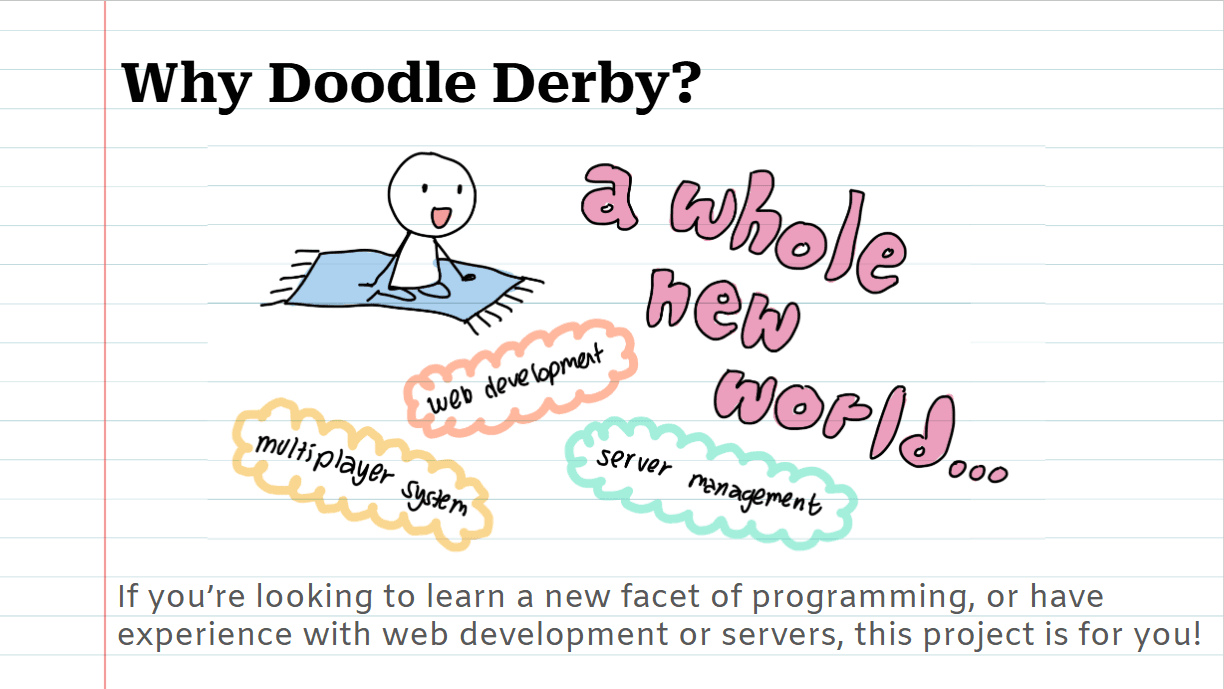
Slide taken from Doodle Derby's pitch deck. Concept and illustration by Allie Atkinson.
Those who've been selected are then asked to prepare for pitch night: their chance to present their idea to VGDC at large. At the event, attendees are able to express interest in working on a selection of ideas; afterwards, we do our best to place participants into a team of their choosing.
At the time of writing, all teams are working in preparation for VGDC's prototype showcase, their first chance to show off the fruits of their labor! While we encourage teams to create a presentable prototype, we also welcome them to share any concepts they've made up until this point.
Why Is Forge?
The structure of the project was born through combining TritonWare and TCP. Whereas TritonWare focuses on small teams with similarly scoped games, TCP revolves around a singular, larger team, all contributing to one correspondingly scoped game.
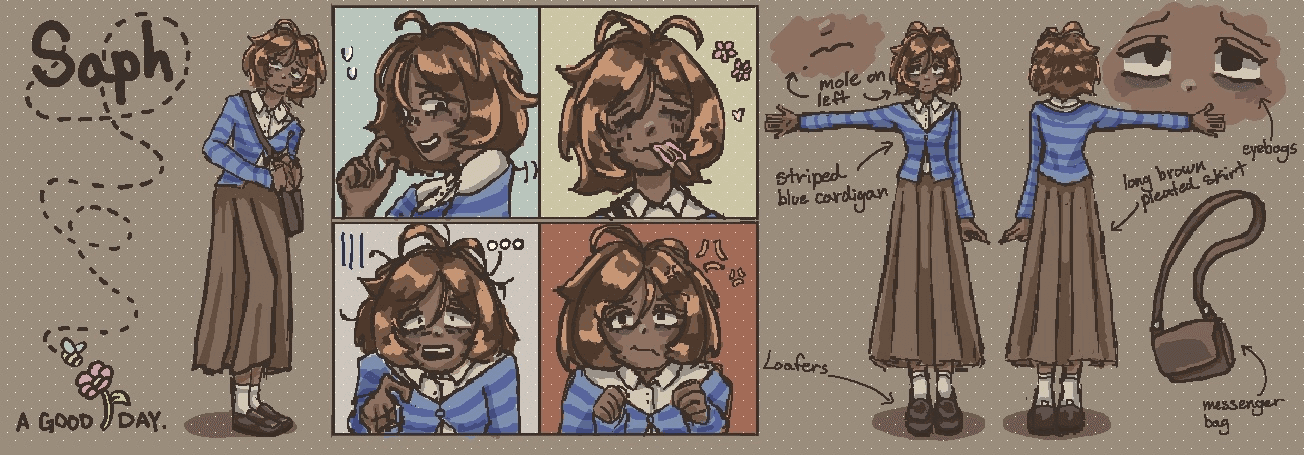 Character concept art from A Good Day. Artwork and finalized design by Joyce Chen.
Forge lies snugly in the middle: medium sized teams, working on their own medium scoped game. This was for two main reasons—to provide participants with more agency over a longer project, and to present passionate members with the opportunity to assemble a team and bring their idea to life!
Challenges
Like anything, the start of this project was a learning experience. Not only did we need to establish new workflows, we also needed to figure out both how to teach and distribute the task management software Taiga to all of our teams.
Creating the timeline also proved to be a challenge: potential participants expressed difficulty in submitting their pitches in the time between announcement and the end of the submission period. To accommodate, we ended up extending the submission deadline by a couple of days.
Finally, there was some fear surrounding the amount of submissions we'd received. In the week leading up to the deadline, we'd only received a handful. The last few days, though, we had a huge influx coming in!
Goals
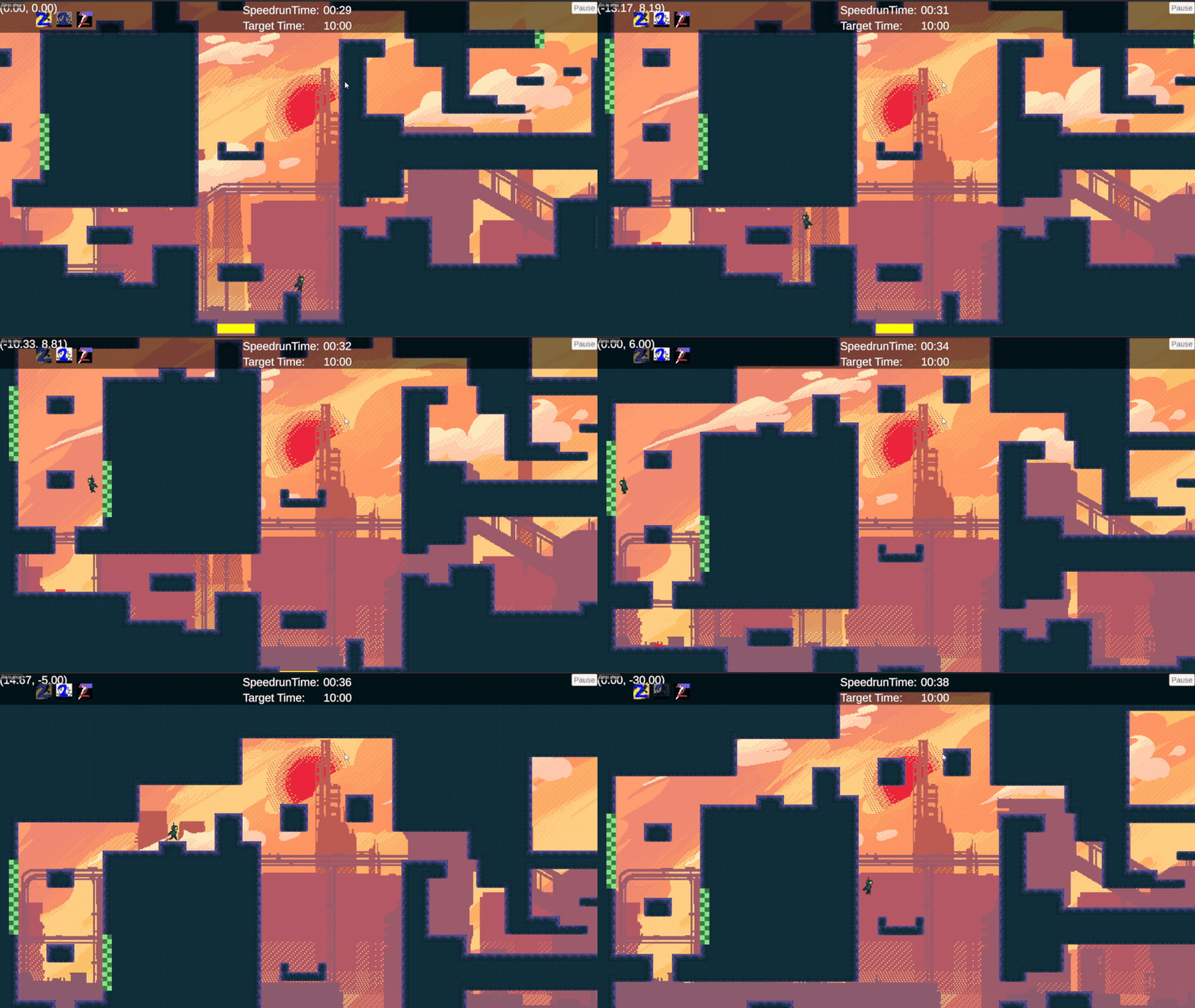 A sneak peek at Speedrunner Roguelike's current prototype.
First and foremost, we want participants to have fun. We know everyone does this for a love of the medium, and we want the structure of the project to reflect that.
Professionally, Forge's structure presents our members with an opportunity to hopefully not only gain polished portfolio pieces, but also hands-on project management experience.
Thank You
Thank you to all of our Forge teams who shared some of their assets; it was an honor to be able to show off your work. Tune in during week six for our next blog post—as always, thank you for reading!
Share this blog