
%20by%20%E2%80%9EZoish%E2%80%9D%2C%20licensed%20under%20%E2%80%9ECC0%201.0%E2%80%9D%20(https%3A%2F%2Fcreativecommons.org%2Fpublicdomain%2Fzero%2F1.0%2F)%3C%2Fdc%3Arights%3E%3C%2Frdf%3ADescription%3E%3C%2Frdf%3ARDF%3E%3C%2Fmetadata%3E%3Cmask%20id%3D%22viewboxMask%22%3E%3Crect%20width%3D%22560%22%20height%3D%22560%22%20rx%3D%22280%22%20ry%3D%22280%22%20x%3D%220%22%20y%3D%220%22%20fill%3D%22%23fff%22%20%2F%3E%3C%2Fmask%3E%3Cg%20mask%3D%22url(%23viewboxMask)%22%3E%3Crect%20fill%3D%22%23ffffff%22%20width%3D%22560%22%20height%3D%22560%22%20x%3D%220%22%20y%3D%220%22%20%2F%3E%3Cg%20transform%3D%22translate(136%20328)%22%3E%3Cpath%20d%3D%22M130.4%2084.6a46.5%2046.5%200%200%201%2028.5-7.8c6.2.5%2010.7%203.5%2011%209.9.3%207.4-5.7%207-10.8%207.1h-24c-5.5-.3-7.8-3-4.7-9.2Z%22%20fill%3D%22%23000%22%2F%3E%3C%2Fg%3E%3Cg%20transform%3D%22translate(246%20125)%22%3E%3Cpath%20d%3D%22M53.4%2096.7c.2-5.7.5-10.4.3-15-.2-7.3%203-10.2%2010.5-8.5%202.8%2010.7%202%2022%201.1%2032.7-1.8%2019.6%207.7%2032%2023%2041.6%2019.6%2012.3%2025.6%2032.7%2013.4%2048.6-19.8%2025.4-56.3%2021.8-75-4.1-2.2-3.2-1.4-7.5%200-11.2.9-2.3%201.9-5%205-5%203.8-.2%205.2%202.2%205.6%205.5%201.8%2012.3%2010.8%2016.9%2021.2%2018.8%2013%202.4%2024.5-.5%2032.3-12.4%207-10.7%205-20.9-6-26.9-25.4-13.7-35.9-34.6-31.4-64Z%22%20fill%3D%22%23000%22%2F%3E%3C%2Fg%3E%3Cg%20transform%3D%22translate(-45%20137)%22%3E%3Cpath%20d%3D%22M215.1%2076.6c5-12%209-29.4%2024.1-22.5%2020.7%209.4%2013.9%2030.7%209.7%2047.4-1.6%206.3-14.5%2015.9-18.3%2014.3-16.3-6.8-19.2-21.7-15.5-39.2ZM442%20113.4c-8.6%207.5-17%207.6-22.2-1.5-9-16-8.6-32.8%203.3-47.2%202.5-3%2013.8-3.6%2016.3-1%2014%2015%2014.6%2031.8%202.6%2049.7Z%22%20fill%3D%22%23000%22%2F%3E%3C%2Fg%3E%3Cg%20transform%3D%22translate(-45%20137)%22%3E%3C%2Fg%3E%3Cg%20transform%3D%22translate(119%20114)%22%3E%3Cpath%20d%3D%22M15%2039C23.8%2024.6%2037%2020.4%2051.9%2019c23.2-2.3%2044%208.5%2065.9%2012.8%208%201.5%206.8%207.5%201.4%2010.7-9.4%205.7-19.5%2011-31.2%207-22.5-7.6-45.1-12-68.6-4.1-6.2%202-5-2-4.2-6.3ZM255%2029c15-2.6%2028.7-5.3%2042.2%201.5%2010.8%205.5%2015%2014%2012.9%2025.5-5%203.1-7.5-.4-10.6-2.5-11.6-7.9-23.9-10-37.3-4.6-9.3%203.7-19.2%202.4-29%202.4-4.7%200-8.4-1.8-8.7-7-.4-5.5.9-10.8%206.9-12%207.3-1.7%2015-2.2%2023.7-3.3Z%22%20fill%3D%22%23000%22%2F%3E%3C%2Fg%3E%3C%2Fg%3E%3C%2Fsvg%3E)
Nathan Scott
May 04, 2026 A look at the scene tab for Spoilage's Unity project.
Spoilage Development Log: From the Kitchen
Hello everybody. My name is Nathan Scott, a second year computer science major, and one of two programming leads for this season's TCP. For context, we're currently halfway through our development timeline for Spoilage. Now that most of the game's design has been fleshed out, we've begun implementing core systems in Unity.
Project Setup
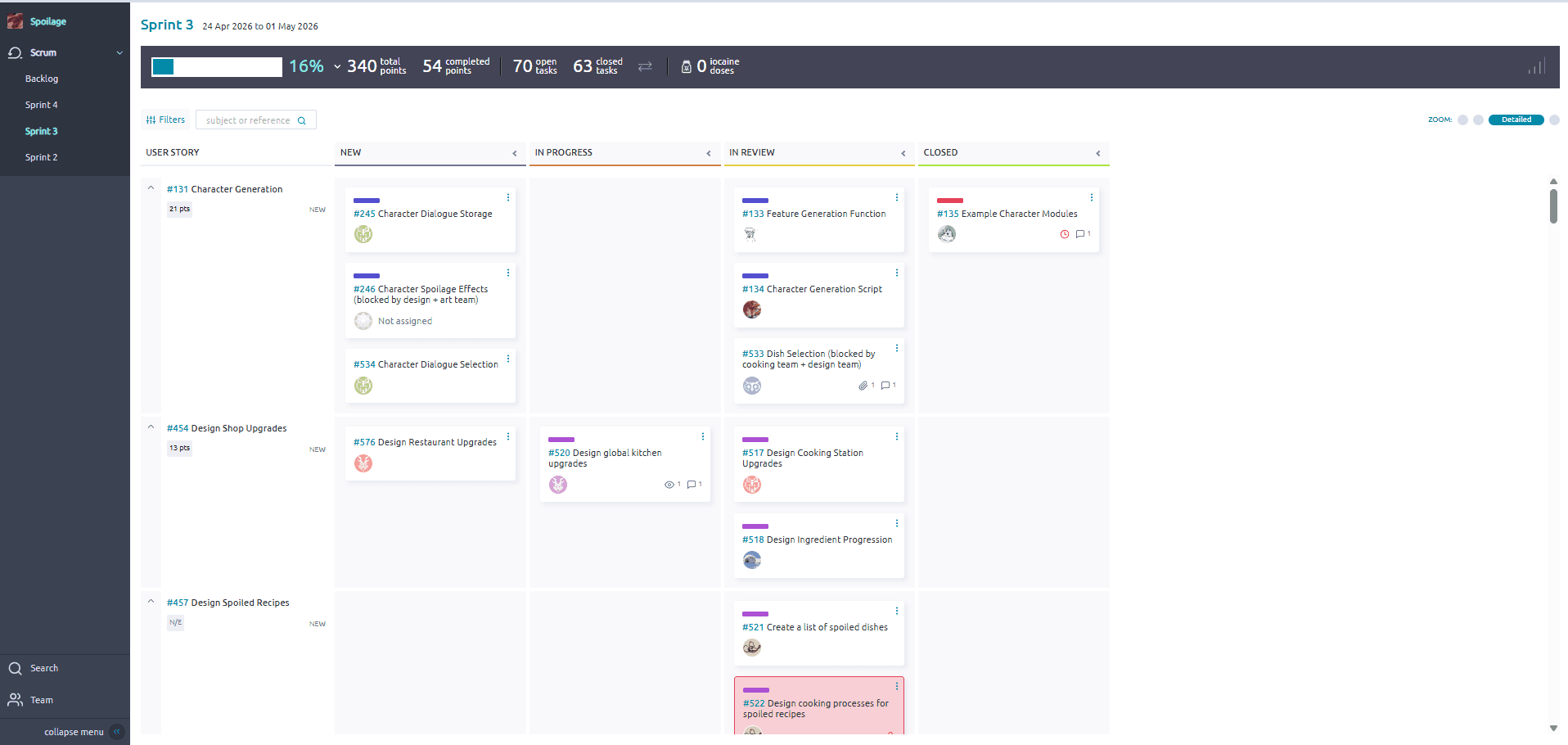 A look at the Taiga board for Spoilage.
With over 150 developers working on Spoilage, two of the biggest challenges for development are communication and team management. Every week, on either Thursday or Friday, we have a half-meeting, half-work session, where everyone reviews each other's work, and receives their tasks for the next week. Every team has their own methods of communication, but we're unified in our usage of Taiga, a free project management software hosted by one of our tech officers, Timothy Washburn, to assign tasks and keep track of progress.
Beyond weekly tasks, we have three big deadlines as a project: A prototype due by April 30th, a playtesting session on May 16th during one of our Game Night Social events, and the final game is due May 28th, where it will be showcased at our Summer Sendoff event.
Programming Subteams
With over 50 programmers, we've had to split into groups of programming teams to ensure each core aspect of the game gets the attention it deserves, while making sure there aren't too many hands on any given one. To provide some insight on the specifics of development, here's a quick look at what each programming subteam has been up to:
Cooking
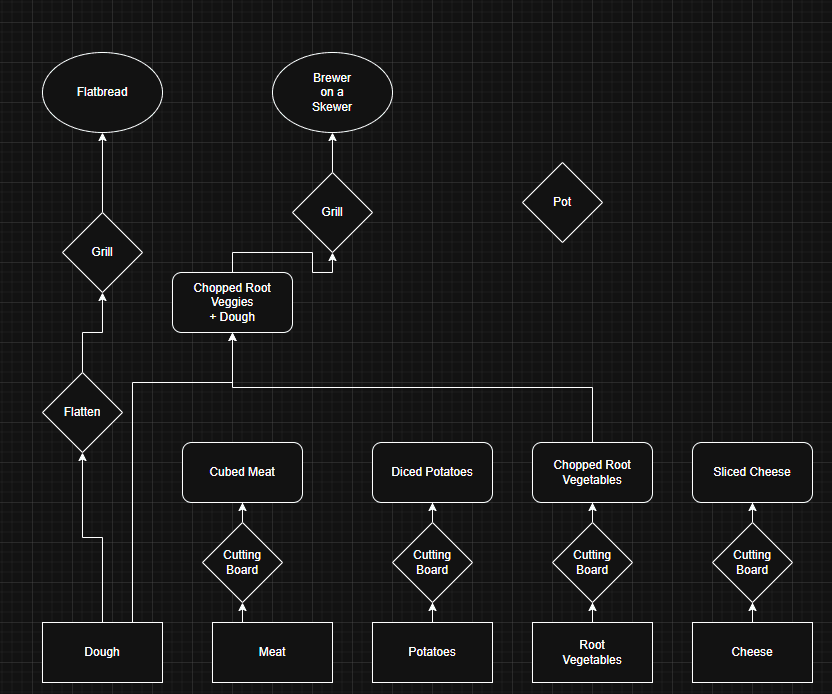 A preliminary version of the cooking design graph for Spoilage.
Since Spoilage is a cooking simulator at heart, this is where the player will be spending most of their time. Under their subteam lead Calista Hartono, the cooking subteam has been hard at work implementing the main gameplay of Spoilage—this includes recipes, ingredients, and cooking stations. So far, they've already built systems for the two main types of cooking stations planned.
Cooking stations can be broken down into two categories: passive stations, and active stations. With passive stations like a pot or a grill, the player simply drops ingredients in, and waits for them to cook. With active cooking stations like the cutting board, the player needs to interact with them repeatedly throughout the cooking process in order to perform that station's given task.
This week, the cooking subteam has been working on the interactive parts of the cooking interface. Thanks to their hard work, players will be able to customize their kitchen layout by dragging cooking stations around to designated tiles on a grid.
Customer Generation
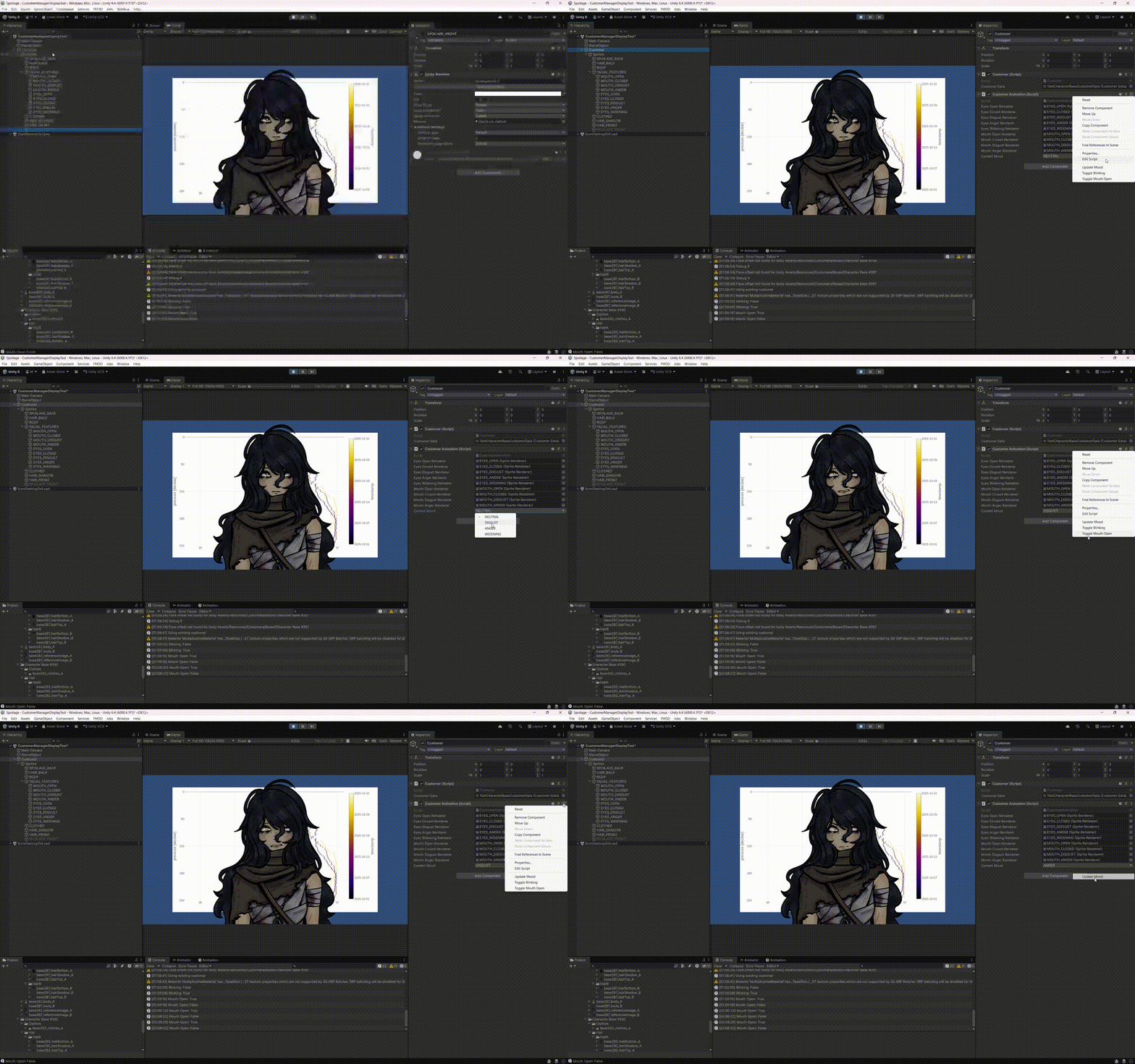 Spoilage's customer animation system displayed in the Unity game engine.
One of the challenges of making a doorman simulator is ensuring you have enough "unique' characters to fill each day in your game. Luckily, this is where our customer generation programming subteam comes in quite useful.
Under subteam lead Bree Tassinari, the customer generation subteam is responsible for randomly generating unique characters from pools of hand drawn art assets and written dialogue. The customer's visuals are structured kind of like a customizable doll: you start with a base, add the eyes, nose, mouth, and finally, throw on the hair and clothes. Since the system for visuals is mostly done, the team will soon be shifting focus to randomly selecting dialogue lines from different pools, depending on the player's choices in the story.
Customer Interaction
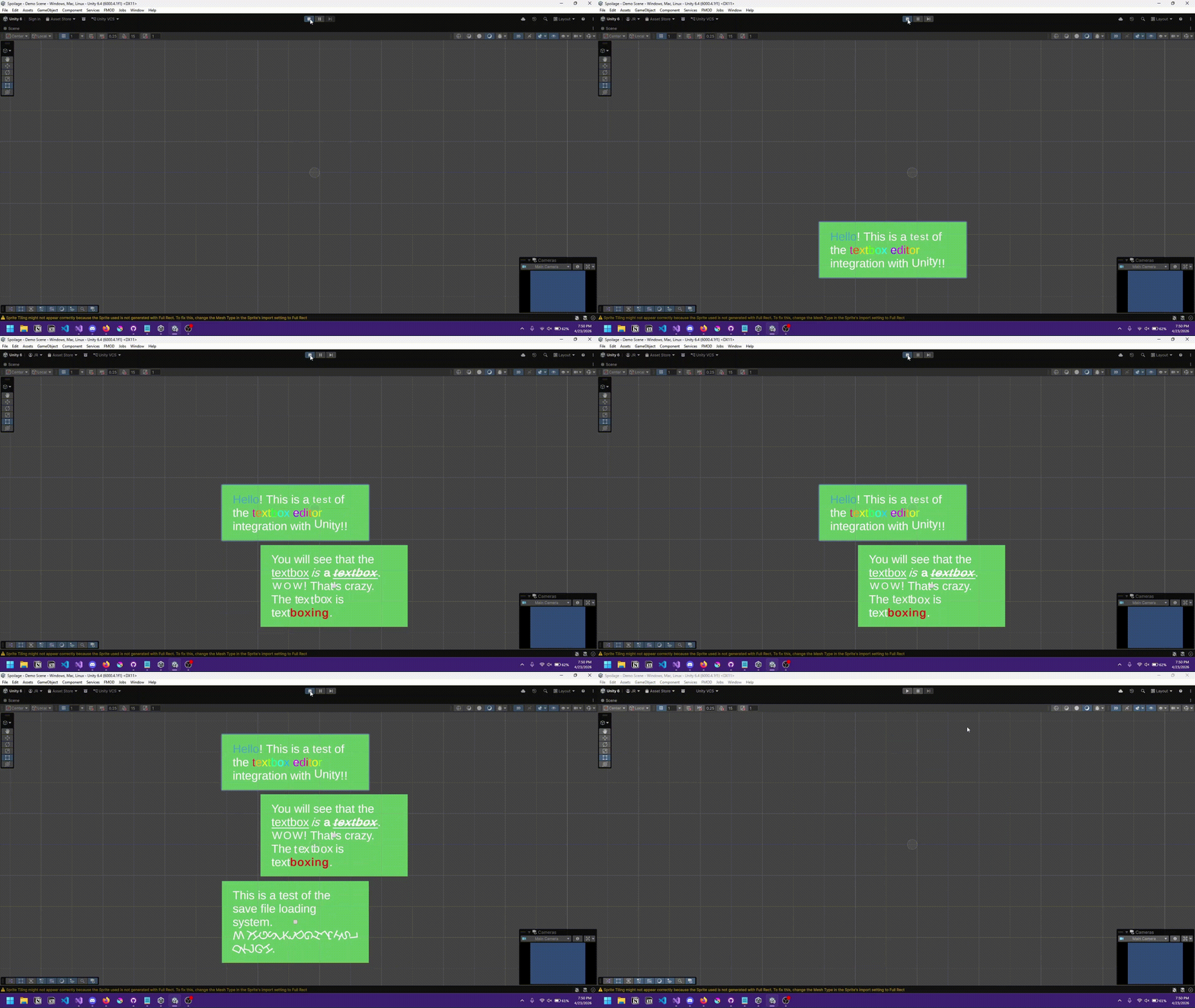 An early test of Spoilage's dialogue system.
Having a uniquely generated doll is great, but now we need to bring them to life. Led by Nathan Reed, the customer interaction subteam controls all of the customer’s behaviors and moving parts. So far, they’ve been working on displaying the customer’s order and implementing an animated dialogue bubble system.
In the coming weeks, the team will be focusing on the branching customer appearance logic and animating the character’s movement within the screen. There are two main types of animations that a customer can use. First, for the face, mouth, and Spoilage symptoms, programmers will be swapping between different sprites to show different facial expressions or moving signs of Spoilage. Second, to simulate the characters “walking” across the screen, the team will be using interpolation across a sine wave to move the entire character object.
Menus
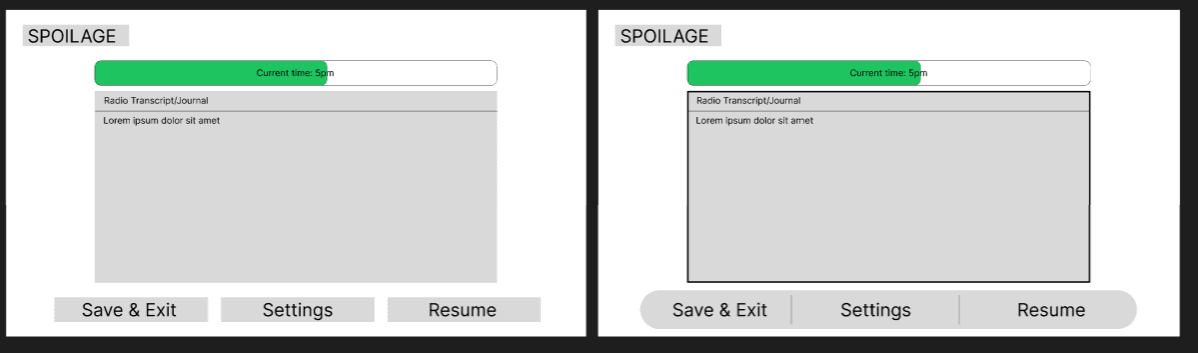
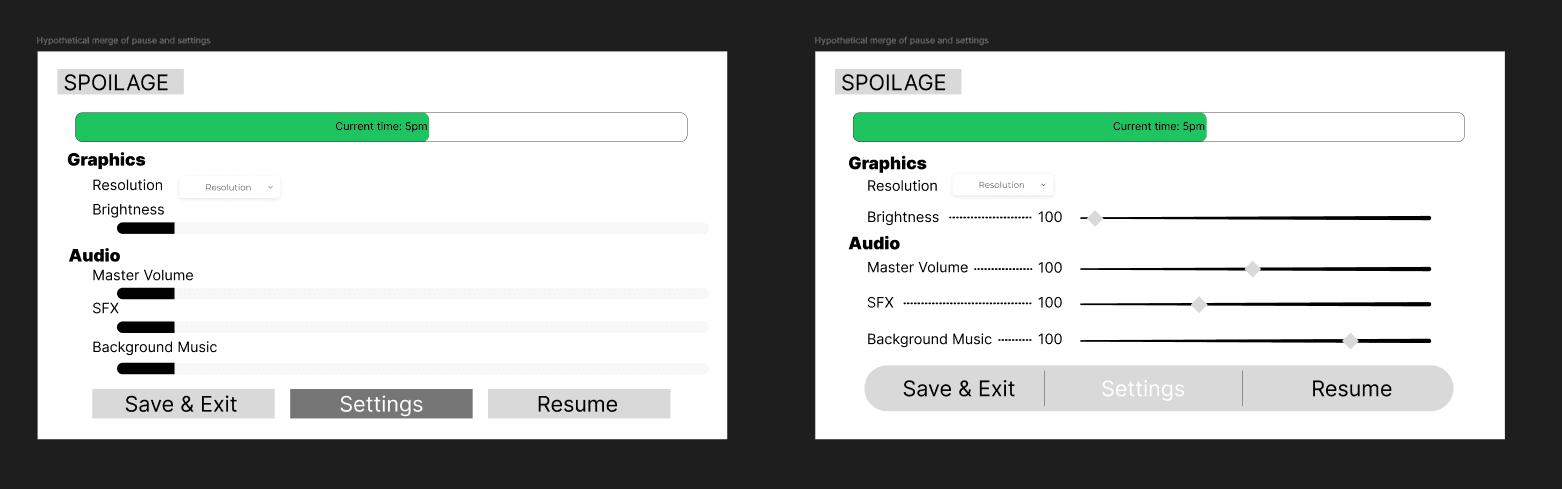 Concepts for the game's pause menu created by Spoilage's UI/UX team.
One of the most underappreciated aspects of games, menus are, of course, essential to navigating Spoilage's user interface. Underneath subteam lead Kunal Shah, the menus subteam handles any and every non-gameplay system / UI windows that require interfacing with the player. So far, the team has completed the menus for: scene loading, the save system, and the pause menu.
Shop
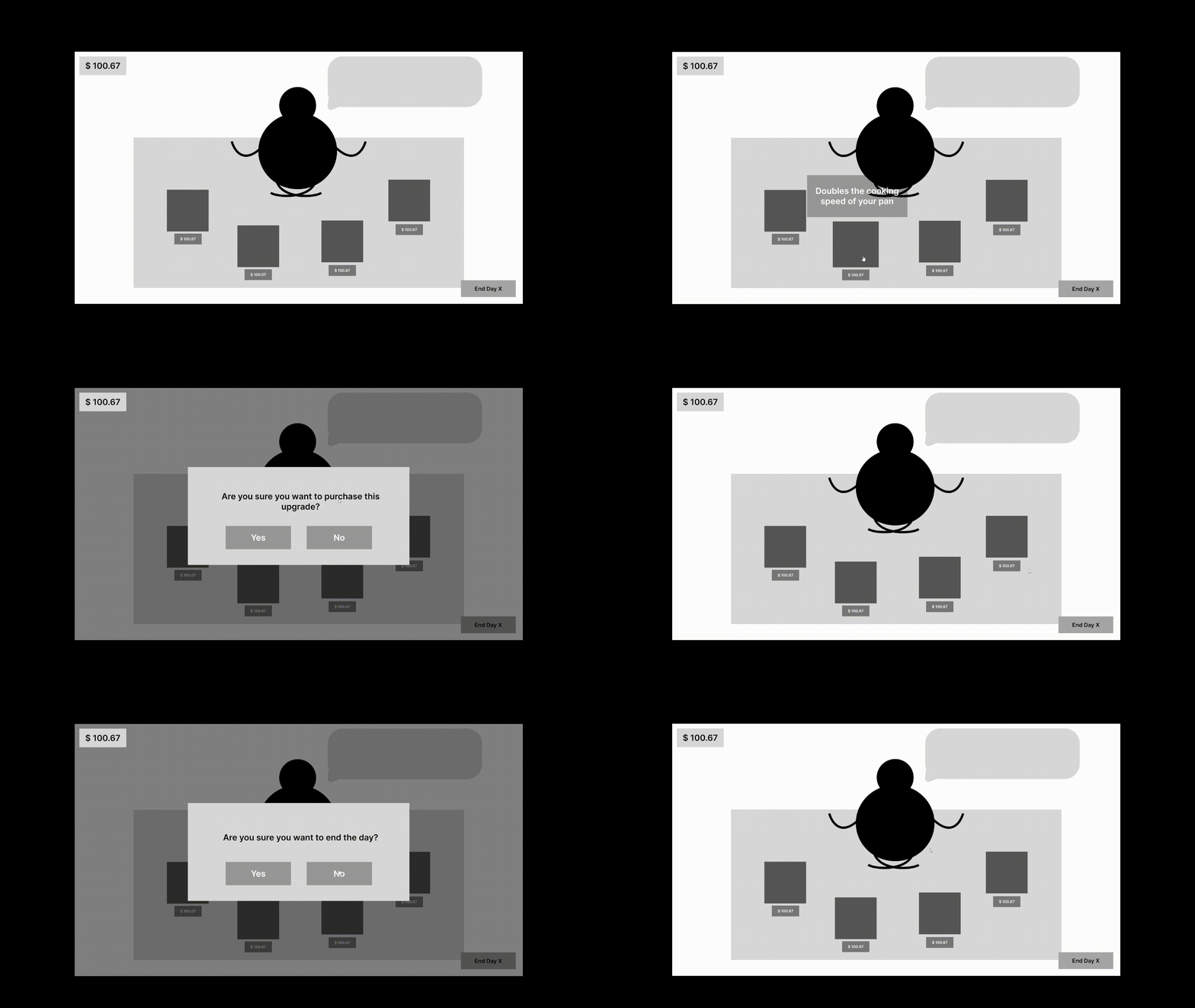 A mockup/demo for a possible layout of the shop and its interactions.
And finally, under subteam lead Abdulaziz Khader, the shop subteam is responsible for the majority of progression in the game that takes place outside of the cooking system. The shop was subject to a lot of design discussions, causing it to take a long time for it to be finalized, but development has gotten to a point where the programming subteam was able to implement the game's currency, as well as a basic framework for purchasable upgrades to the player's kitchen.
What's Next for Spoilage
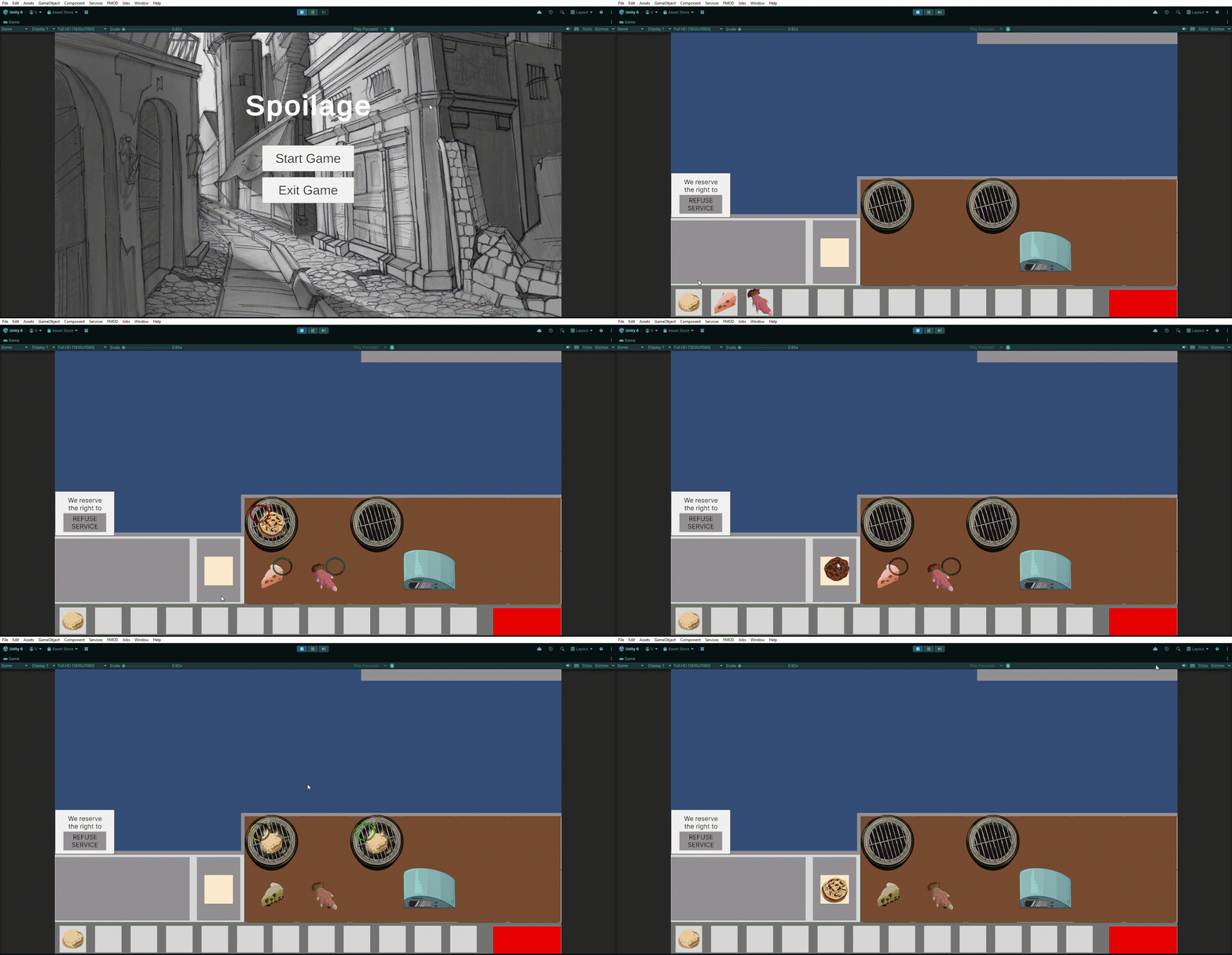 The showcased demo for Spoilage.
At the time of writing, my co-programming lead Jonathan Renteria and I have been putting together an initial demo, made from the accumulated work of all 150 developers. By the time you're reading this, the demo will have been showcased at our first Game Night Social of the quarter.
The next checkpoint for development will be playtesting on May 16th, at our second game night social—the goal is to have an early playable build of the game open to all event attendees, from which the development team will receive feedback, and adjust the game accordingly.
Thank You
Thank you to everyone on the development team for Spoilage. Whether you're a participant or project lead, it's been a very pleasant experience working with you all. We also want to extend our thanks to Eric Cai, the creative director and original pitcher for Spoilage, for his hard work on and passion for the project. Please keep an eye out for our next blog post.
Share this blog